BLOG

Practicing Retrospectives with Empathy
We usually conduct retrospectives based on the KPT (Keep, Problem, Try) framework, but often find that few "Keep" items are brought up, while most of the sticky notes focus on "Problem," resulting in a rather stoic atmosphere. While there’s nothing inherently wrong with that, I wondered if we could make the sessions more positive and enjoyable, where everyone’s achievements could be celebrated. That’s when I came across a tweet by @nozawabit.
KPTではないのですが、この記事の内容をカスタマイズしてレトロしたところ、Kがよく出て、自責以外のPも出るようになりました!Kが「ドやりたいこと」「感謝したいこと」「続けたいこと」にあたり、PとTが「聞いてほしいこと」「変えたいこと」にあたると思っています。https://t.co/9e3GMoWTfY
— Hiroko Nagaoka( Nozawa) / simufu Inc. (@nozawabit) September 24, 2021
I tried the format introduced in the tweet, and it resulted in a much more fulfilling retrospective session. Here are some of my insights.
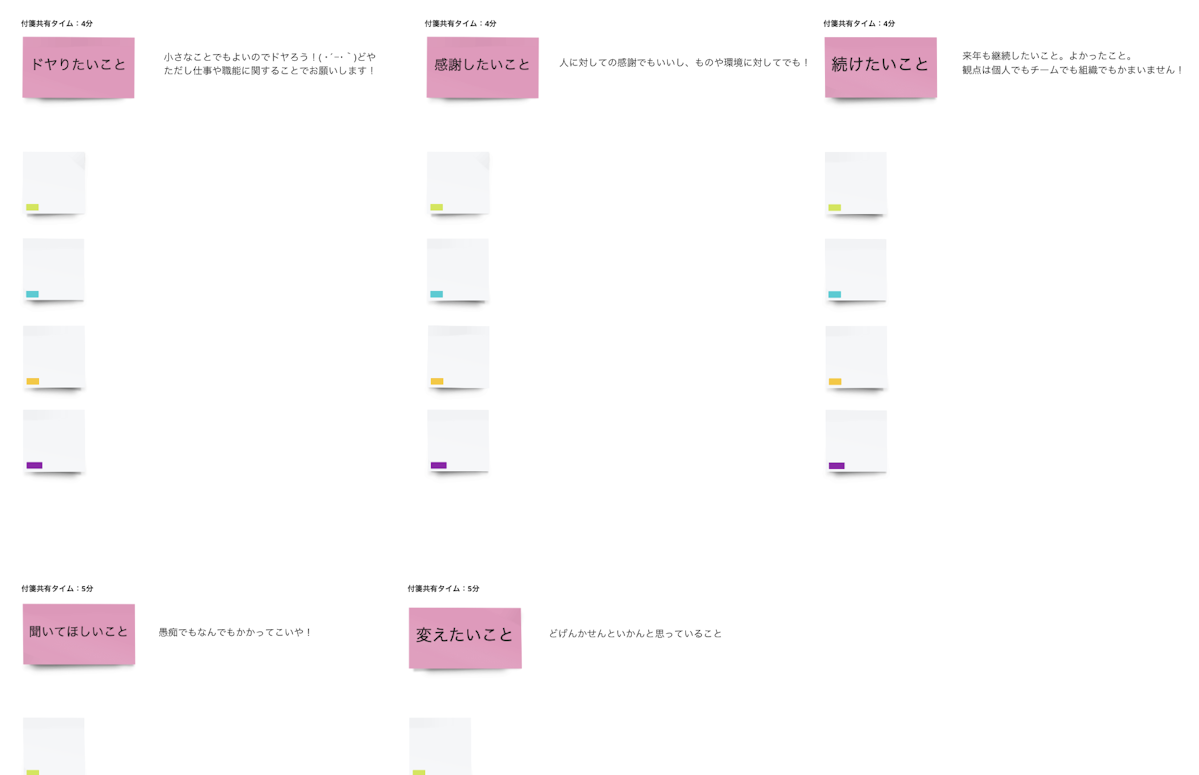
More Positive Notes
Simply changing the labels of "Keep" to "What I’m Proud Of," "What I’m Grateful For," and "What I Want to Continue" significantly increased the number of positive sticky notes. Additionally, focusing on both individual and team efforts allowed us to see personal strengths and the positive aspects of the team.
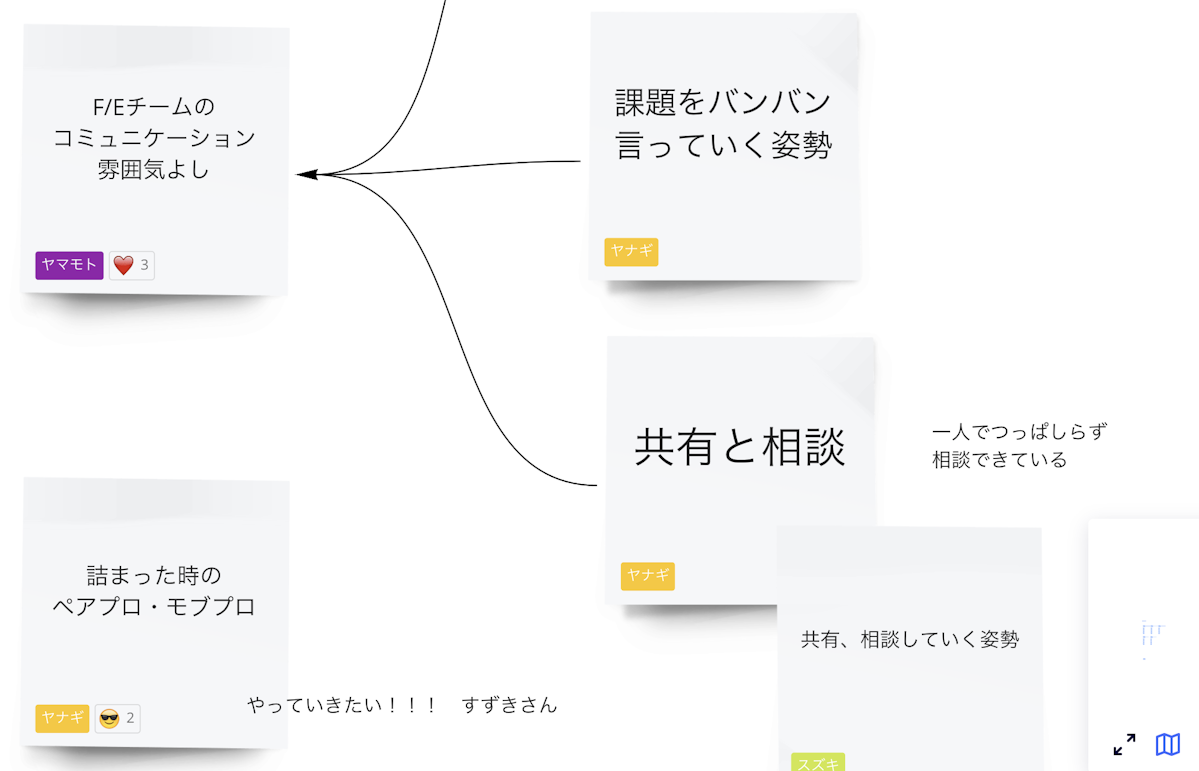
Some members contributed by improving test coverage and strengthening our foundation, while others steadily advanced complex projects or acted as facilitators for the team. It was great to collectively realize that everyone contributes in their own way.
Smoother Communication
Separating "What I Want to Share" from "What I Want to Change" helped us distinguish actionable problems from casual grievances, streamlining communication. While writing the sticky notes, we also started considering, “Is this something that needs to be solved?”
Problems are endless, and if we try to discuss all of them, there would never be enough time. Having a "What I Want to Share" category also allowed us to vent minor issues without framing them as significant problems.
Easier to Express Feelings
Using labels that are empathetic towards feelings made it easier to discuss emotional challenges. For instance, memorable topics included “I want to stop being overly considerate of the team” and “I want to stop overusing the bowing emoji.” These are issues that likely wouldn’t have surfaced in a traditional KPT framework.
Summary
While it’s often said that being emotional is not ideal, emotions are a natural part of being human. I believe in creating a team environment where everyone can honestly express their thoughts and feelings and celebrate each other’s efforts. By conducting retrospectives with empathy, we enhanced mutual understanding and psychological safety.
I also realized how much the format impacts the outcome of retrospectives. Understanding the characteristics of different formats and choosing the right one for the situation can lead to better results.
ラベリングって結構大事なんだな〜
— Karo/カオルコ (@yykaoruko) November 10, 2021
人の動きがほんと変わる気がする。
抽象化しすぎるより、コミュニケーションとか感情に寄り添ったラベルのほうが、意図を実践しやすいんだろうな〜とか思った
Retrospectives are profoundly deep.