BLOG

What I Learned About Context Engineering from LLMs, RAG, and Agent Development
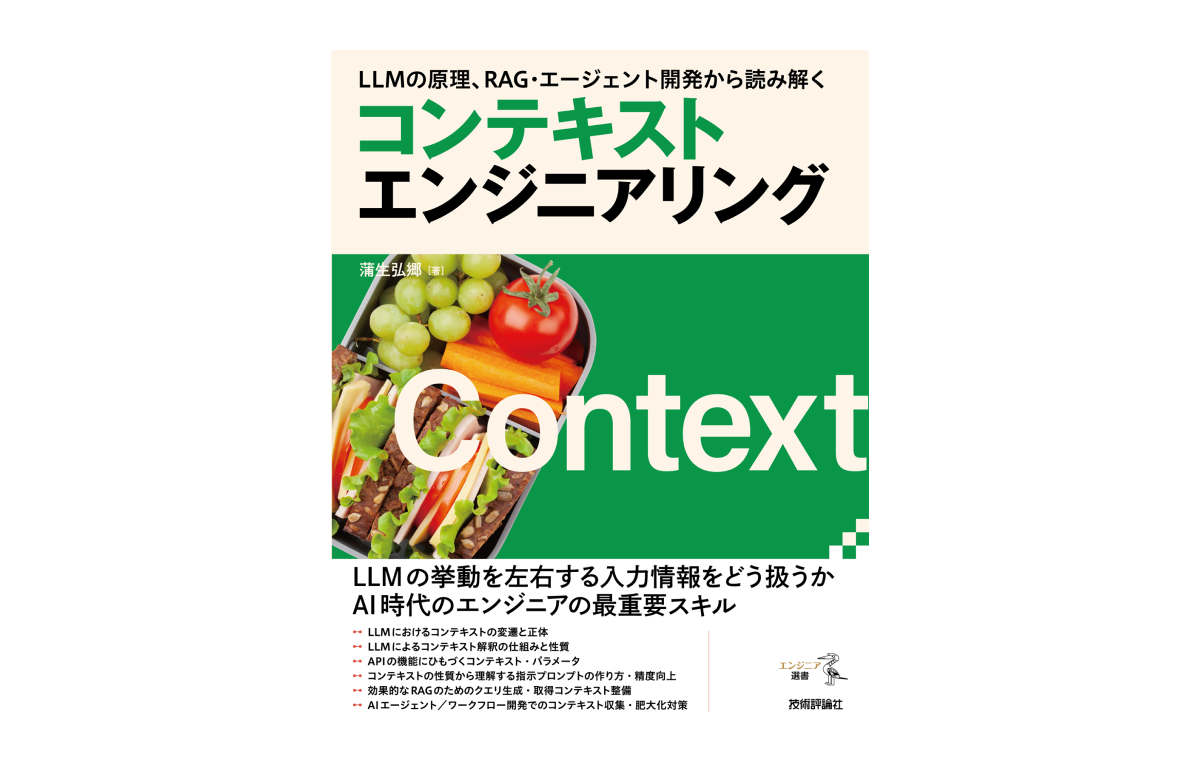
I have read "Understanding the Principles of LLM and Contextual Engineering Through RAG Agent Development" by Gamo Hirosato.
I am an engineer who is not familiar with machine learning, but this book was easy to understand, covering everything from how LLMs work to practical workflow designs. Highly recommended.
- Input design:Few-shot prompting / Lost in the middle
- Thinking:Chain-of-thought
- External connection:Function calling / MCP / RAG
- Output controll:Structured output
- Performance optimization:Context cache
- Security:Jailbreak measures
Recently, many engineers try to use AI for everything and believe it can do anything, so it was really impressive to think about doing it without AI. LLM has a strong ability to generate text. On the other hand, programs are still necessary for calculating and strict processes. Additionally, designing proper boundaries and considering limitations of the context window and security are crucial. To design workflow, both technical perspective and domain knowledge are essential.
When I worked on contract development, I was deeply frustrated that I could not handle small incremental improvements. From this experience, I started to have this idea ー in-house teams automatically improve and grow with their service. With the advent of AI, this future seems to become a bit more of a reality.
Honestly, I feel a quiet unease about the relative decline in the value of writing code by hand. However, I have spent 9 years in web development and operation, and my experience would not be replaceable.
Keep applications running is much more difficult than creating applications, and that is where my true value as an engineer lies.
I have admired engineers who were active during the early days of the internet, and I never expected to face a moment like this. I have to rethink everything differently than before, but I see it as a positive opportunity and will keep updating my value as an engineer.